
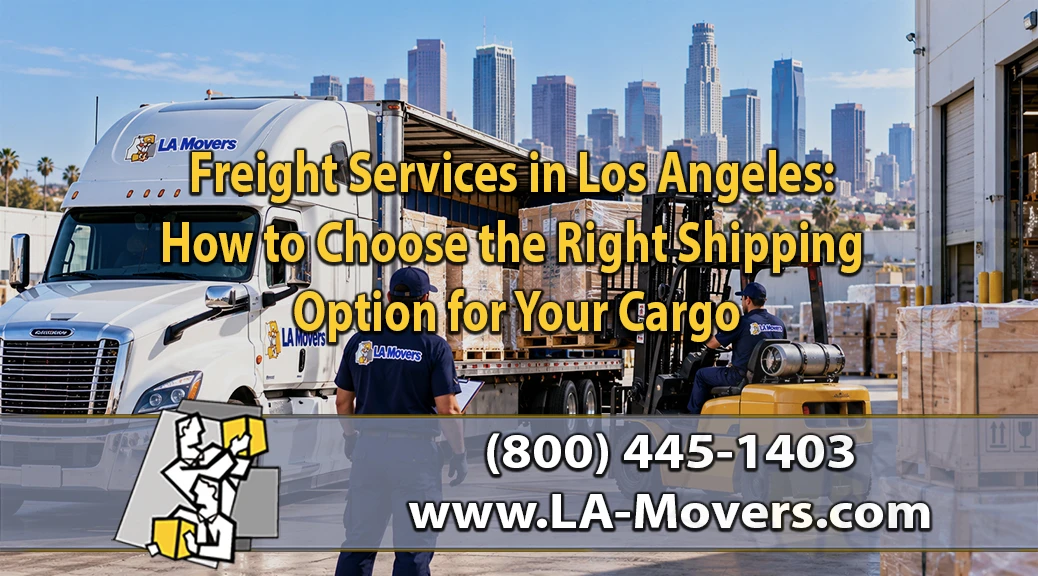
Moving cargo from one location to another is not always as simple as arranging a truck and scheduling a pickup. Businesses may need to ship pallets of products, heavy machinery, construction materials, retail inventory, oversized equipment, or goods traveling to international destinations. Each shipment comes with its own requirements, and choosing the right freight service can make a meaningful difference to the transportation process.
For businesses in Los Angeles, freight shipping may involve local deliveries, transportation across the United States, or international shipments that require coordination between different transportation methods. The right solution depends on what is being shipped, how much space the cargo requires, where it is going, and when it needs to arrive.
LA Movers provides freight and shipping services for a range of cargo requirements, including flatbed freight, van freight, oversized cargo transportation, and international air and ocean freight. Understanding the available options can help businesses prepare for a shipment and have a more productive conversation with a freight provider.
What Are Freight Services?
Freight services involve the transportation of commercial goods, materials, equipment, and other cargo between locations. Businesses use freight transportation to move products to customers, transfer inventory between facilities, receive supplies, and transport equipment for commercial projects.
Unlike a typical parcel delivery, freight shipments can involve larger quantities, heavier items, pallets, crates, or cargo that needs specific loading arrangements. Some shipments fit inside a standard enclosed vehicle, while others may require a flatbed truck or a combination of transportation methods.
The type of freight service needed depends on the shipment rather than simply the distance. A pallet of packaged merchandise may have very different requirements from a large piece of industrial machinery, even when both are traveling to the same destination.
Before choosing a service, businesses should understand the size, weight, dimensions, packaging, handling requirements, destination, and delivery schedule of their cargo. These details help a freight provider determine which transportation options are suitable.
Why Choosing the Right Freight Service Matters
Freight transportation affects more than the movement of goods. It can influence inventory planning, project schedules, receiving arrangements, and the way a business manages its supply chain.
For example, a retailer receiving several pallets of products needs to coordinate delivery with its receiving area and available storage space. A construction company shipping large equipment may need to consider loading access, cargo dimensions, and whether the destination can accommodate a flatbed delivery. A business shipping goods overseas may need to coordinate transportation with international shipping and documentation requirements.
Choosing an unsuitable service can create avoidable complications. Cargo may not fit the planned vehicle, loading arrangements may be inadequate, or the receiving location may not be ready when the shipment arrives.
A well-planned freight shipment begins with understanding the cargo and matching it to an appropriate transportation method. It also requires clear communication about pickup arrangements, destination access, scheduling, and any special requirements.
Which Freight Service Is Right for Your Shipment?
There is no single freight option that works best for every shipment. The most appropriate choice depends on the cargo, distance, urgency, handling requirements, and available transportation options.
Van Freight for Enclosed Cargo
Van freight is often suitable for palletized goods, packaged merchandise, retail shipments, and other cargo that can be transported inside an enclosed vehicle.
An enclosed trailer or van can help shield cargo from direct exposure to weather during transportation. This may be useful for businesses shipping boxed products, packaged supplies, or goods that should remain inside a covered vehicle.
The cargo still needs to be packed and secured appropriately. Packaging, loading procedures, and the suitability of the vehicle depend on the type of goods being transported.
When requesting van freight, provide the number of pallets or pieces, dimensions, weight, pickup location, delivery address, and any access restrictions. If the shipment includes fragile or unusually shaped items, explain those requirements before booking.
LA Movers lists dedicated van freight among its shipping and freight services in Los Angeles. Businesses can discuss their shipment details to determine whether this option fits their needs.
Flatbed Freight for Heavy or Oversized Cargo
Some cargo cannot be loaded conveniently into a standard enclosed vehicle. Heavy machinery, construction equipment, building materials, and large irregularly shaped items may require flatbed transportation.
A flatbed trailer provides an open platform that can accommodate certain loads that would be difficult to load through conventional vehicle doors. Depending on the cargo, loading may require suitable lifting equipment, securement methods, and access for loading and unloading.
Oversized shipments can involve additional planning. Dimensions, weight distribution, route restrictions, loading locations, and destination access may all affect the transportation arrangements. Some loads may require permits or escorts, depending on applicable regulations and the shipment’s characteristics.
Businesses should provide accurate measurements and explain how the cargo will be loaded and unloaded. Photographs, equipment specifications, and information about lifting points can help the provider assess the requirements.
LA Movers offers flatbed freight options for cargo such as heavy equipment, machinery, construction materials, and other large items. Its flatbed freight services provide more information about the service.
Intermodal Freight for Longer Transportation Routes
Intermodal freight uses multiple modes of transportation to move cargo along a shipment route. A shipment may travel by truck for one part of its journey and use rail, ocean shipping, or another suitable mode for a different section.
This approach can be useful when a shipment’s route, distance, cargo type, and delivery requirements make a combination of transportation methods appropriate. It can also require more coordination because the shipment may pass between different carriers, terminals, and handling locations.
Businesses considering intermodal transportation should understand the full route, estimated transit arrangements, transfer points, and responsibilities for coordinating each stage. The destination’s receiving capabilities and the shipment’s delivery deadline should also be considered.
Intermodal freight is not automatically the best choice for every long-distance shipment. The appropriate method depends on the route, timing, cargo characteristics, and available service options.
LA Movers describes intermodal freight services that combine transportation methods such as trucking, rail, ocean shipping, and air cargo. Learn more through its intermodal freight services page.
International Air and Ocean Freight
Businesses shipping goods internationally may need to choose between air freight, ocean freight, or a coordinated solution involving other transportation methods.
Air freight may be worth considering when shipment speed is a priority and the cargo is suitable for air transportation. Ocean freight is commonly used for international cargo that can be transported by sea and may be more practical for certain shipment sizes or requirements.
The decision depends on factors such as cargo dimensions, weight, delivery deadline, destination, budget, and the type of goods being shipped. International transportation may also require customs documentation and compliance with import and export requirements.
Businesses should establish who will handle the relevant shipping documents, customs arrangements, and coordination between transportation providers. Requirements vary by shipment and destination, so these details should be confirmed before the cargo is dispatched.
LA Movers offers international air and ocean freight services. If your shipment needs to travel outside the United States, discuss the destination, cargo details, schedule, and documentation requirements with the provider before deciding on the shipping method.
Understanding LTL and Full Truckload Freight
Another important consideration is how much of the transportation vehicle your shipment needs.
Less-than-truckload, commonly called LTL, generally refers to freight that shares vehicle capacity with shipments from other customers. Full truckload, or FTL, generally involves reserving the truckload for one shipment or customer.
The right option depends on the amount of cargo, its dimensions, handling requirements, route, timing, and available rates.
When LTL Freight May Be Suitable
LTL freight can be worth considering when a business has a relatively small shipment that does not require an entire truckload. This may include several pallets of merchandise, packaged materials, or other cargo suitable for consolidated transportation.
Because cargo may share vehicle space with other shipments, handling and transit arrangements can differ from those of a dedicated truckload. Businesses should ask about pickup schedules, estimated transit time, cargo requirements, and how the shipment will be handled during transfers.
LTL should not be selected on price alone. Fragile cargo, unusually large items, strict delivery windows, and special handling needs may affect whether the service is appropriate.
When a Full Truckload May Make More Sense
A full truckload may be appropriate when the shipment occupies a substantial amount of vehicle space, requires a dedicated load, or has handling and scheduling needs that make shared transportation less suitable.
For some shipments, a dedicated truck can simplify loading arrangements and reduce the need to coordinate with other cargo. However, it is not automatically the least expensive option, particularly when a shipment uses only a small portion of the available capacity.
Ask for a quote based on the actual cargo and route. Comparing the full cost, transit expectations, and service requirements can help determine which arrangement is more suitable.
What Businesses Should Prepare Before Booking Freight
Good preparation helps a freight provider understand the shipment and identify potential issues before pickup.
Start by creating an accurate description of the cargo. Include the number of items or pallets, dimensions, total weight, packaging type, and any special handling requirements. If the shipment contains machinery or unusual equipment, provide its specifications and explain whether it can be loaded with standard equipment.
Next, review pickup and delivery access. Consider loading docks, vehicle restrictions, operating hours, parking, available lifting equipment, and whether someone will be present to receive the shipment. These details are particularly important for warehouses, construction sites, commercial buildings, and locations with limited access.
Packaging should be appropriate for the cargo and the expected transportation method. Pallets should be stable, crates should provide suitable protection, and cargo should be secured according to the applicable handling requirements. Fragile or sensitive goods may require additional packaging or specific orientation instructions.
Finally, communicate the delivery deadline and any restrictions before confirming the shipment. If the cargo must arrive before a scheduled installation, production run, or retail launch, explain the timing requirements early. This allows the provider to discuss realistic transportation options and any limitations that may affect the schedule.
How Freight Shipping Costs Are Determined
Freight pricing varies from one shipment to another. The total cost can depend on several factors, including distance, cargo dimensions, weight, transportation method, handling requirements, and the service level requested.
The type of freight also matters. A shipment requiring flatbed transportation may involve different equipment and loading arrangements from palletized goods transported in an enclosed vehicle. Oversized cargo may require additional route planning or regulatory arrangements.
International shipments introduce further considerations, such as air or ocean transportation, handling at transfer points, customs-related requirements, and destination services. These should be discussed when requesting a quote rather than assumed to be included automatically.
Pickup and delivery conditions can also affect the work involved. Restricted access, limited operating hours, special loading requirements, or the need for additional handling equipment may change the transportation arrangements.
To obtain a useful estimate, provide complete and accurate shipment details. Ask what the quote includes, whether additional handling or destination charges may apply, and which services are the responsibility of the shipper or receiver.
Comparing freight quotes is most useful when each provider is pricing the same shipment requirements. A lower initial figure may not represent the same transportation method, delivery schedule, or included services as another quote.
Freight Services for Different Industries
Freight transportation supports many types of business activity, but each industry may have different priorities.
Retailers may need to move palletized inventory between suppliers, distribution locations, and stores. Their priorities can include receiving schedules, packaging, delivery coordination, and the ability to accommodate the shipment at the destination.
Construction businesses may need to transport building materials, machinery, and oversized equipment. In these situations, cargo dimensions, loading equipment, site access, and securement arrangements can be central to the planning process.
Manufacturers may ship raw materials, components, finished products, or equipment between facilities. Freight planning can be connected to production schedules and inventory availability, making accurate delivery information important.
Businesses transporting large commercial equipment may need a service that considers the equipment’s size, weight, and loading requirements. Flatbed freight or another specialized arrangement may be suitable, depending on the item and the route.
For international businesses, transportation may involve coordination between local pickup, air or ocean freight, customs requirements, and final delivery. Understanding the full shipment process helps the business identify which services it needs to arrange.
In each case, the freight solution should be based on the shipment’s actual requirements rather than assuming that the same transportation method works for every type of cargo.
Why Work With LA Movers for Freight Services?
LA Movers provides freight and shipping services in Los Angeles for businesses with different transportation requirements. Its listed services include van freight, flatbed freight, oversized cargo transportation, intermodal freight, and international air and ocean freight.
This range of options can be relevant to businesses shipping anything from palletized goods to heavy or irregularly shaped cargo. The suitable service depends on the shipment details, destination, timing, and handling requirements.
When contacting LA Movers, explain what you need to ship, where the cargo is located, where it is going, and when it needs to arrive. Include measurements, weight, packaging details, and information about loading and delivery access. If you have unusual cargo or a strict deadline, mention it at the beginning of the discussion.
This gives the team a clearer understanding of the job and provides a basis for discussing available transportation options.
To learn more about the company’s freight offerings, visit the LA Movers website or contact the team through its contact page.
Choose Freight Services Based on Your Cargo
The most appropriate freight service starts with understanding what you are shipping and what the shipment needs to accomplish. Palletized products, heavy machinery, oversized equipment, and international cargo can require different transportation methods and levels of coordination.
Before booking, confirm the cargo dimensions, weight, packaging, destination access, delivery deadline, and any special handling requirements. Then compare the available options based on the service provided, total cost, and suitability for your shipment.
If your business needs freight services in Los Angeles, LA Movers can discuss its available freight options and the requirements of your shipment. Providing clear information at the start can help you identify a suitable transportation arrangement for your cargo.
Frequently Asked Questions About Freight Services
What are freight services used for?
Freight services are used to transport commercial goods, pallets, machinery, materials, equipment, and other cargo between locations. The appropriate service depends on the cargo, distance, destination, schedule, and handling requirements.
What is the difference between van freight and flatbed freight?
Van freight transports cargo inside an enclosed vehicle and is commonly used for suitable palletized or packaged shipments. Flatbed freight uses an open platform and can accommodate certain heavy, oversized, or irregularly shaped loads. The cargo’s dimensions, protection needs, and loading requirements determine which option is appropriate.
What is the difference between LTL and full truckload freight?
LTL freight generally shares vehicle capacity with other shipments, while full truckload freight typically dedicates the truckload to one shipment or customer. The better option depends on cargo volume, route, handling needs, timing, and quoted cost.
Can freight services transport oversized cargo?
Some freight providers offer transportation for oversized cargo, but the shipment must be assessed according to its dimensions, weight, route, and loading requirements. Certain loads may need permits, escorts, or specialized equipment, depending on applicable rules and conditions.
Does LA Movers offer international freight shipping?
LA Movers lists international air and ocean freight among its shipping services. Availability and arrangements depend on the shipment, destination, cargo type, and applicable documentation requirements. Contact the company to discuss the details of your shipment.
What information do I need to request a freight quote?
Prepare the pickup and delivery addresses, cargo description, dimensions, weight, number of pieces or pallets, packaging details, preferred shipping date, delivery deadline, and any special handling or access requirements. Complete information helps the provider assess the shipment more accurately.
How can I choose the right freight service for my business?
Start by identifying the cargo’s size, weight, destination, delivery timeline, and handling needs. Compare suitable transportation methods and review the complete quote, including any additional services or charges. If you are unsure which option fits your shipment, discuss the cargo details with a freight provider before booking.