Why Work-Site Conditions Matter When Renting a Forklift
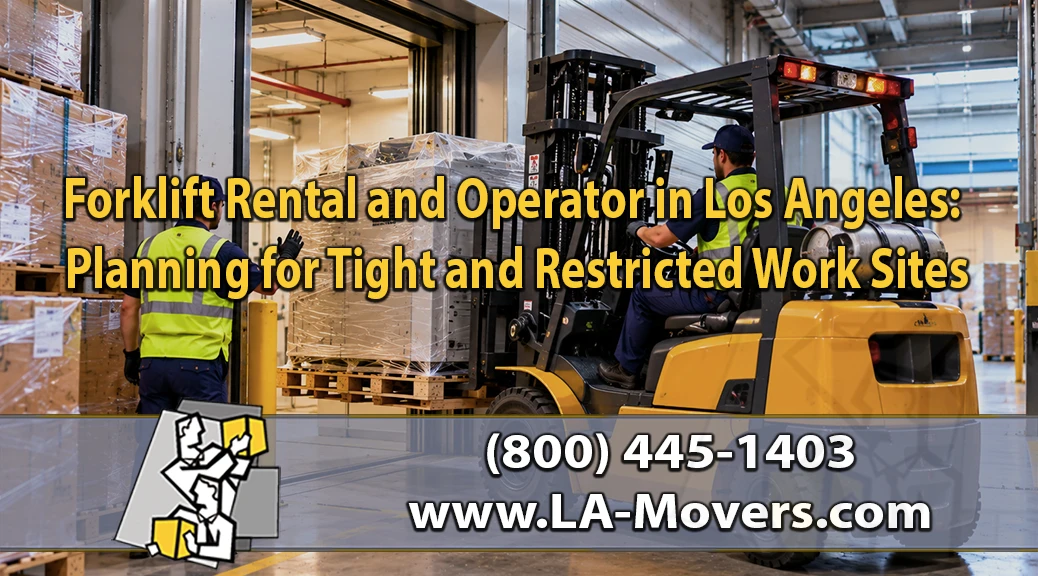
Renting a forklift may seem straightforward when a business needs to move heavy materials. However, the job becomes more complicated when the equipment must operate in a confined warehouse, a busy commercial property, a narrow loading area, or a location with limited vehicle access.
The challenge is not simply lifting a load. The forklift must be suitable for the available space, the surface beneath it, the weight and dimensions of the material, and the route between the pickup and placement points. If these details are overlooked, a machine that appears suitable on paper may not be practical for the actual job.
For businesses arranging forklift rental and operator services in Los Angeles, evaluating the work site before scheduling equipment can help avoid delays and make the handling process easier to coordinate.
LA Movers provides forklift rental and operator services for material-handling needs. Explaining the conditions at the site helps establish what the job involves and which arrangements may be appropriate.
The Challenges of Operating in Confined Spaces
Not every workplace has the open floor area found in a large distribution warehouse. Some businesses operate from older industrial buildings, compact storage facilities, commercial basements, or properties where aisles and access points are restricted.
In these environments, turning space can be just as important as lifting capacity. A forklift may be able to raise a pallet to the required height but lack enough room to approach it, turn safely, or position the load where it needs to go.
Doorway dimensions, ceiling height, aisle width, overhead obstructions, and the space needed to maneuver should all be considered. The overall dimensions of the forklift matter, but so does the room required to turn and handle the intended load.
The load itself can make the task more difficult. Long materials, oversized crates, and bulky machinery may extend beyond the forks or obstruct the operator’s view. The handling plan should account for the full dimensions of the load rather than just its weight.
Providing measurements and photographs of the work area before the rental is arranged can help the service provider assess the requirements more accurately.
Choosing Equipment for Indoor Commercial Locations
Indoor forklift work requires attention to the building as well as the material being moved. A warehouse, retail unit, office building, and industrial facility can have very different operating conditions.
Floor surfaces are one important consideration. The site team should identify whether the forklift will operate on smooth concrete, uneven flooring, ramps, or other surfaces that could affect stability and movement. Floor load limits may also need to be checked, particularly in older buildings or elevated areas.
Overhead clearance is equally important. Low ceilings, sprinkler systems, lighting fixtures, pipes, and structural beams can restrict where a forklift can travel or raise a load. The equipment must be suitable for the available clearance and the required lifting height.
Indoor air quality also matters. Depending on the location and operating conditions, an electric forklift may be more appropriate than equipment powered by an internal-combustion engine. Equipment selection should consider ventilation, manufacturer requirements, and the property’s operating rules.
A professional assessment should consider these conditions together. Selecting a forklift based only on its rated capacity can overlook restrictions that determine whether it can perform the job safely.
Planning Forklift Access at Busy Commercial Properties
Some of the most difficult material-handling jobs take place at sites that cannot simply stop operating while the work is completed.
A retail business might need heavy display fixtures moved through a service entrance. A commercial building may require equipment or materials to be unloaded while tenants and deliveries continue to use the property. An industrial facility may have to coordinate forklift work around production schedules and vehicle movements.
In these situations, timing and access are central to the plan.
Before arranging the rental, confirm where the forklift can enter, where the material will be delivered, and which areas must remain clear. If the site has a loading dock, restricted gate, security checkpoint, or designated delivery window, communicate those conditions in advance.
It may also be necessary to coordinate with building management. Some properties have rules governing equipment use, access routes, noise, operating hours, or temporary closures. Understanding those requirements before the work begins can reduce the likelihood of interruptions.
For busy Los Angeles locations, scheduling should also account for local traffic and the time required to access the property. A delivery appointment that does not match the site’s access arrangements can complicate an otherwise manageable job.
Moving Heavy or Awkward Loads Through Restricted Areas
Some materials are difficult to handle because their shape makes them harder to position, even when their weight is within the forklift’s rated capacity.
Industrial components, machinery, large crates, metal frames, and commercial fixtures may have uneven weight distribution or dimensions that make turning and placement challenging. Some items have designated lifting points or orientation requirements that must be followed.
Before moving an unusual load, identify its approximate weight, dimensions, center of gravity where known, and any manufacturer-provided handling instructions. Confirm whether the item can be safely handled with the proposed forklift and attachment. A load that is too long, too wide, or otherwise unsuitable for the equipment may require a different handling method.
The load should also be stable and appropriately secured before lifting. Loose components, damaged pallets, or poorly positioned materials can create hazards during movement. When the item is machinery or specialized equipment, preparation should follow the manufacturer’s requirements and involve qualified personnel when necessary.
The operator needs a clear understanding of the intended route and final placement point. If the load blocks forward visibility, the movement plan must account for that limitation using appropriate procedures and assistance.
No single forklift configuration is suitable for every difficult load. The equipment, operator, attachment, and handling method must all match the job.
Coordinating Forklift Work Around Other Contractors
Forklift rental is often one part of a larger project. A business may be receiving machinery, installing shelving, reorganizing warehouse storage, moving commercial furniture, or preparing equipment for transportation.
When multiple teams are working at the same location, the sequence of activities can affect how smoothly the job proceeds.
For example, a forklift may be needed to place heavy equipment before installation technicians can connect or assemble it. If the receiving area is not cleared or the final position has not been confirmed, the operator may arrive without a practical place to set the load.
Coordination should begin before the equipment arrives. Identify who is responsible for preparing the work area, confirming the load’s destination, directing site access, and communicating changes to the schedule.
It is also important to establish a controlled work zone. Pedestrians and unrelated activities should be kept clear of forklift travel and lifting operations in accordance with the site’s safety procedures. When spotters or other personnel are needed, their roles should be agreed upon before work begins.
Businesses arranging several related services may also need transportation or material-handling support. LA Movers offers freight solutions and forklift rental and operator services that may be relevant to different parts of a commercial logistics project.
What Information to Provide Before Requesting a Forklift
A useful rental inquiry describes the work rather than simply requesting a forklift of a particular size.
Start by explaining what needs to be lifted and where it will be moved. Include the estimated weight and dimensions of the load, the lifting height required, the distance it must travel, and the number of items involved. If the weight is uncertain, explain that rather than relying on an unsupported estimate.
Next, describe the site. Note whether the work is indoors or outdoors, the type of ground or floor surface, any narrow entrances, low clearances, ramps, loading docks, or other access limitations. Photographs and measurements can help clarify conditions that are difficult to describe in words.
The planned schedule is also important. Explain when the site is available, whether work must occur outside normal business hours, and whether other contractors or delivery vehicles will be present.
Finally, clarify the services required. Ask whether the arrangement includes an operator, transportation of the equipment, the expected rental period, and any other charges or site requirements. Confirm what is included in the quote rather than assuming every service is automatically covered.
This information gives the provider a more complete picture of the job and makes it easier to discuss the available options.
Understanding the Cost of Forklift Rental and Operator Services
The cost of forklift rental and operator services depends on the equipment and work involved. The rental period is one factor, but it is not the only consideration.
A job requiring a forklift to move standard pallets across an accessible warehouse may involve different resources from a project that requires specialized equipment, difficult access, unusual loads, or careful placement inside a commercial building.
Transportation, setup requirements, operating time, site restrictions, and the need for additional handling arrangements can all influence the final estimate. The details vary by provider and project, so businesses should request a quote based on the actual job.
When comparing estimates, make sure each provider has the same information about the load, location, schedule, equipment requirements, and operator services. A lower initial price may not represent the same scope of work as another quote.
It is also worth asking how changes to the planned work would be handled. If the load is heavier than expected, the site is not ready, or access differs from the original description, the equipment or schedule may need to be reassessed.
Clear communication before booking helps establish expectations and reduces avoidable surprises.
How LA Movers Can Help With Forklift Rental and Operator Needs
When a commercial project involves heavy materials, restricted access, or coordination with other moving and logistics activities, choosing the right material-handling arrangement is an important part of planning.
LA Movers offers forklift rental and operator services in Los Angeles for businesses that need support with lifting and moving materials. The requirements of each job depend on the equipment, the cargo, the work area, and the planned schedule.
Before contacting the team, prepare the load details, measurements, photographs of access points where useful, and the preferred work date. Explain any special placement requirements or restrictions at the site so the project can be discussed with those conditions in mind.
You can learn more about the forklift rental and operator service or contact LA Movers to discuss your project and request a quote.
Frequently Asked Questions About Forklift Rental and Operator Services
Can I rent a forklift for a location with narrow aisles?
Potentially, yes. The suitable equipment depends on aisle width, turning space, load dimensions, lifting height, and the conditions of the floor. Share measurements of the access route and working area before scheduling a rental so the requirements can be assessed.
What should I check before using a forklift inside a commercial building?
Check doorway and ceiling clearance, floor conditions and load limits, ventilation requirements, access restrictions, and the route between the loading point and the final placement area. The equipment must be appropriate for the building and the task.
Can a forklift handle oversized machinery or unusual loads?
Some forklifts can handle certain oversized or unusual loads, but suitability depends on weight, dimensions, load balance, lifting points, attachments, and the machine’s rated capacity. Provide the relevant specifications before the job is arranged. Some loads may require an alternative lifting method.
Should I send photos of the work site when requesting forklift rental?
Photos can be helpful, especially when the site has narrow entrances, overhead obstructions, limited turning space, or difficult loading access. Include measurements wherever possible, since photographs alone cannot establish dimensions, floor capacity, or equipment suitability.
Can forklift work be scheduled around business operations?
Scheduling may be possible around delivery windows, business hours, or other project activities, depending on availability and site conditions. Discuss access times and any restrictions in advance so the proposed schedule can be evaluated.
Does forklift rental automatically include an operator?
Not necessarily. Inclusions depend on the provider and the rental arrangement. Confirm whether a qualified operator is included, what the service covers, and whether transportation or other site-related costs are charged separately.
What happens if the forklift cannot access the planned work area?
If access is unsuitable, the original plan may need to change. An alternative machine, a different route, revised placement arrangements, or another handling method may be necessary. This is why checking access dimensions and site conditions before the rental is arranged is so important.