

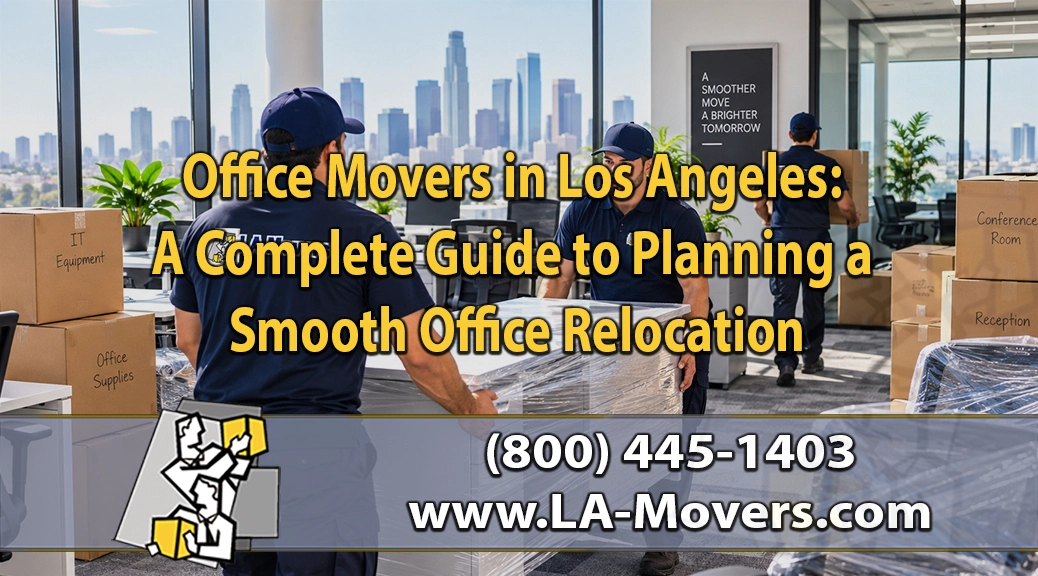
Moving an office is very different from moving a home. A business relocation involves furniture, computers, documents, equipment, workstations, technology, and employees—all of which need to be coordinated carefully. At the same time, your company still needs to keep operating.
That is why choosing the right office movers can make a significant difference.
A well-planned office relocation can help reduce downtime, protect valuable equipment, keep employees informed, and get your new workspace operational as quickly as possible. A poorly planned move, on the other hand, can lead to delays, misplaced equipment, damaged furniture, and unnecessary disruption to your business.
For businesses in Los Angeles, office moving can come with additional challenges. Traffic, parking, elevators, high-rise buildings, building access requirements, narrow loading areas, and busy commercial districts all need to be considered when planning a relocation.
Professional office movers can help manage the physical side of the move while giving your business a structured plan for packing, transportation, unloading, furniture setup, and other relocation requirements.
Whether you are moving a small office, expanding into a larger workspace, downsizing, or relocating an entire corporate operation, this guide explains how to prepare for an office move and what to look for when choosing professional office movers in Los Angeles.
What Do Office Movers Do?
Office movers specialize in relocating businesses from one workplace to another.
Unlike a typical residential move, an office relocation may involve many different categories of property. Desks and chairs are only one part of the job. Businesses may also need to move conference tables, filing cabinets, cubicles, shelving, computers, servers, electronics, documents, reception furniture, and other workplace equipment.
Professional office movers can coordinate different stages of the relocation, including:
- Office packing
- Furniture disassembly
- Furniture protection
- Loading
- Transportation
- Unloading
- Furniture reassembly
- Cubicle relocation and installation
- Office equipment moving
- Storage
- Unwanted furniture removal
The exact services needed depend on the size and complexity of the office.
LA Movers describes its office moving services as covering the relocation process from planning and packing through transportation, unloading, and setup. Its office furniture services also include disassembly, packing, loading, transportation, unloading, reassembly, and installation.
Why Office Relocation Requires Careful Planning
An office move affects more than furniture.
Your employees need access to their workstations. Computers and other technology need to be transported safely. Important documents need to remain organized. Managers may need to coordinate with building management, IT teams, vendors, and contractors.
Even a relatively small office can contain hundreds of individual items.
Before moving anything, create a clear inventory of what is being relocated.
Separate items into categories such as:
- Furniture
- Computers and electronics
- Documents and files
- Office supplies
- Kitchen or break-room equipment
- Conference room equipment
- IT infrastructure
- Items going into storage
- Items being removed or discarded
This gives you a clearer picture of the project and helps your moving company prepare the appropriate equipment and labor.
When Should You Start Planning an Office Move?
There is no single timeline that works for every business. The amount of time required depends on the size of the office, the distance of the move, the amount of equipment, building requirements, and how much preparation is involved.
However, starting early generally gives you more flexibility.
Several Weeks Before the Move
Begin by confirming your new location, target move date, building requirements, and the scope of the relocation.
At this stage, identify everything that needs to move and determine whether any items will be replaced, donated, stored, recycled, or removed.
This is also a good time to contact office movers and request an estimate.
A Few Weeks Before Moving Day
Create a detailed moving plan.
Determine which departments or workstations will move first and whether the relocation needs to happen outside normal business hours.
Talk with building management at both locations about elevators, loading docks, parking, access cards, moving hours, and other requirements.
The Final Week
Finalize packing and labeling.
Make sure employees understand what they are responsible for and what the moving company will handle.
Confirm the moving schedule with your office movers and make sure everyone involved has the same information.
Choosing the Right Office Movers in Los Angeles
Choosing a moving company for an office relocation requires more consideration than simply comparing hourly rates.
Your business needs a moving partner that understands commercial environments and can work around operational requirements.
When comparing office movers, consider whether they can handle the specific types of items in your workplace.
For example, an office with standard desks and chairs may have very different requirements from a technology company with servers, specialized equipment, and sensitive electronics.
A larger corporate office may also need project management and coordination across multiple departments.
Look for Experience With Business Relocations
Ask whether the company regularly handles office moves rather than primarily residential relocations.
Office moving involves different logistics, schedules, equipment, and building requirements.
LA Movers specifically provides office moving and commercial moving services for businesses of different sizes and types, including offices, warehouses, retail locations, medical facilities, and other commercial environments.
Ask About Furniture Disassembly and Installation
Large desks, conference tables, cubicles, shelving systems, and other office furniture may need to be disassembled before transportation.
After the move, they may need to be reassembled and installed according to the new office layout.
LA Movers provides office furniture disassembly, assembly, transportation, and installation services.
Consider Equipment and Specialized Tools
Office furniture can be heavy and difficult to maneuver.
Professional movers may use specialized dollies, hand trucks, carts, straps, protective materials, and other equipment appropriate for commercial moving.
For businesses with computers or other sensitive equipment, ask how those items will be handled.
Create an Office Moving Inventory
An inventory is one of the simplest ways to make an office move more organized.
Instead of treating the entire office as one large collection of items, create a list by room, department, or workstation.
For example:
Marketing Department
- 8 desks
- 8 office chairs
- 8 computers
- 2 filing cabinets
- 1 printer
Conference Room
- Conference table
- 12 chairs
- Display
- Whiteboard
- Video conferencing equipment
This makes it easier to determine whether everything arrived at the new location.
You can also label furniture and equipment according to the department or workstation where it belongs.
Protect Office Furniture During the Move
Office furniture can be vulnerable to scratches, dents, and other damage during loading and transportation.
Desks, conference tables, filing cabinets, reception counters, and other large pieces should be handled carefully.
Protective materials can help reduce exposure to damage during the move.
LA Movers’ office furniture moving services describe blanket wrapping and shrink wrapping, along with specialized equipment for office furniture.
Building protection is also important.
Commercial properties may have finished floors, glass doors, painted walls, elevators, and other surfaces that need to remain protected while furniture and equipment are moved through the building.
When discussing your relocation with an office moving company, ask how floors, doors, hallways, and other building areas will be protected.
Moving Computers and Office Electronics
Technology is often one of the most important parts of a modern office move.
Computers, monitors, printers, networking equipment, server equipment, and other electronics require careful handling.
Before moving technology, work with your IT team to determine what needs to be disconnected, packed, transported, and reconnected.
Make a record of equipment locations and connections where necessary.
Labeling cables and equipment can make setup at the new office much easier.
LA Movers offers specialized IT moving and installation services and describes experience with computers, server rooms, equipment, and racks.
For businesses with significant technology infrastructure, coordinating the moving company with the internal IT team can help reduce confusion during the transition.
Moving Office Cubicles and Workstations
Cubicles and modular workstations can be more complicated to relocate than standard desks.
They may need to be carefully disassembled, labeled, transported, and reassembled according to the floor plan of the new office.
Before moving cubicles, establish where each workstation will be located.
A floor plan can help movers understand where furniture should be placed after unloading.
LA Movers provides cubicle installation and office furniture services that include disassembly, assembly, wrapping, transportation, and installation.
Planning this part of the move in advance can prevent the new office from becoming a collection of furniture that still needs to be rearranged after the movers leave.
Minimize Business Downtime
One of the biggest concerns during an office relocation is lost productivity.
Your goal should not necessarily be to move everything as quickly as possible. Instead, the objective should be to coordinate the relocation so your business can return to normal operations as efficiently as possible.
Depending on the business, an office move may be scheduled during evenings, weekends, holidays, or other periods when fewer employees are working.
Discuss your operational schedule with the moving company before selecting the moving date.
LA Movers states that it provides local and long-distance office relocation solutions and works with business schedules and project requirements.
A detailed schedule can help determine:
- When packing begins
- When employees leave the old office
- When equipment is disconnected
- When furniture is loaded
- When transportation takes place
- When unloading begins
- When furniture is installed
- When IT equipment is reconnected
- When employees return
Coordinate With Building Management
Commercial buildings often have specific rules for moving.
Before moving day, check with the building management teams at both locations.
You may need information about:
- Loading dock access
- Freight elevators
- Passenger elevator restrictions
- Parking
- Moving hours
- Security procedures
- Access cards
- Certificates of insurance
- Building protection requirements
The earlier you understand these rules, the easier it becomes to build an accurate moving schedule.
Provide your office movers with the information they need so they can plan around building restrictions.
What Happens to Office Furniture You No Longer Need?
An office relocation is a good opportunity to evaluate furniture and equipment that is no longer needed.
You may have outdated desks, chairs, filing cabinets, cubicles, shelving, or other items that do not fit into the new office.
Rather than moving everything and deciding what to do later, identify unwanted items before the relocation.
Depending on the items and your plans, you may need furniture removal, recycling, donation, storage, or disposal services.
LA Movers offers office furniture removal as well as related services involving unwanted furniture, electronics recycling, scrap metal, cubicle removal, and junk removal.
Removing unnecessary furniture before the move can also reduce the amount of material that needs to be transported.
Office Storage During a Relocation
Sometimes the new office is not ready when the old office needs to be vacated.
In other situations, a company may need temporary storage while renovating or redesigning its workspace.
Storage can also be useful when a business wants to keep furniture or equipment but does not have immediate space for it.
LA Movers offers receiving, delivery, and short- and long-term storage solutions for business furniture, equipment, and supplies.
If storage is part of your relocation plan, determine exactly which items will be stored, how they should be inventoried, and when they will eventually be delivered to the new location.
Local vs. Long-Distance Office Moving
Not every office relocation takes place within the same neighborhood.
Some companies move to another part of Los Angeles, while others relocate to another city, county, or state.
The basic planning principles remain similar, but longer-distance moves may require additional transportation coordination.
LA Movers offers both local and long-distance office moving services and describes its service area as covering Los Angeles and surrounding Southern California counties.
Regardless of distance, accurate information about the origin, destination, inventory, schedule, and access requirements is important.
How Much Does an Office Move Cost?
There is no single price for an office relocation because every project is different.
The cost can depend on factors such as:
- Number of items
- Number of employees or workstations
- Amount of furniture
- Number of movers required
- Distance between locations
- Stairs and elevators
- Long carrying distances
- Packing requirements
- Furniture disassembly and assembly
- Equipment handling
- Storage
- Special scheduling requirements
- Complexity of the new office setup
The most useful way to understand your expected moving cost is to provide the moving company with accurate information about your project.
A walkthrough or detailed consultation can help identify potential challenges before moving day.
LA Movers offers virtual or onsite walkthroughs and estimates for office and commercial moving projects.
Questions to Ask Office Movers Before Hiring Them
Before choosing an office moving company, ask questions that relate directly to your business.
Do You Handle Offices Like Mine?
Explain your company size, industry, office layout, and the types of equipment you need moved.
Can You Handle Office Furniture Installation?
If your move includes cubicles, workstations, desks, conference tables, or shelving, ask whether the company can disassemble and reinstall those items.
How Do You Handle Computers and Electronics?
If your office contains sensitive technology, clarify how computers, servers, networking equipment, and other electronics will be handled.
Can You Work Outside Normal Business Hours?
If downtime is a major concern, ask about evening or weekend scheduling.
Do You Provide Packing?
Some office moves require full packing, while others only need selected equipment or documents packed.
Can You Remove Unwanted Furniture?
If you are downsizing, ask whether the company can also remove furniture and other unwanted items.
Do You Offer Storage?
If the new office is not ready or you need temporary space, determine whether storage is available.
What Information Do You Need for a Quote?
Provide details about the number of rooms, floors, elevators, furniture, equipment, distance, access conditions, and desired schedule.
Why Choose LA Movers as Your Office Movers in Los Angeles?
LA Movers provides specialized office moving services for businesses in Los Angeles and surrounding areas. Its office moving service is designed around business relocation requirements, including planning, packing, transportation, furniture handling, and setup.
The company also provides office furniture moving and installation services, including disassembly, wrapping, loading, transportation, unloading, reassembly, and custom installation.
For businesses with more complex requirements, LA Movers provides related commercial moving, IT moving, warehouse moving, furniture removal, cubicle installation, receiving, delivery, and storage services.
The company lists Los Angeles, Orange County, Riverside, San Bernardino, Ventura, Lancaster, and San Diego among its service areas.
For an office relocation, providing accurate project information is an important first step. Details such as the number of workstations, building access, elevators, stairs, furniture requirements, and desired moving schedule can help the moving team understand the project.
A Practical Office Moving Checklist
Before moving day, make sure your team has considered the following:
Before the move:
- Confirm the new office location.
- Establish the moving date.
- Create an inventory.
- Identify furniture that will not be relocated.
- Coordinate with building management.
- Contact professional office movers.
- Plan computer and IT equipment handling.
- Prepare employee communication.
- Create a floor plan for the new office.
During preparation:
- Label furniture and boxes.
- Organize documents.
- Pack appropriate office supplies.
- Identify fragile or sensitive equipment.
- Disassemble furniture where appropriate.
- Confirm elevator and loading access.
- Confirm the moving schedule.
After arrival:
- Check the inventory.
- Place furniture according to the floor plan.
- Reassemble workstations.
- Set up conference rooms.
- Coordinate IT equipment installation.
- Check that essential departments can resume work.
- Remove remaining unwanted materials.
Having a checklist does not eliminate every challenge, but it gives your team a clear framework to follow.
Request a Quote From Professional Office Movers
An office relocation is a major project, but it does not have to disrupt your business more than necessary.
The key is to plan early, understand your inventory, coordinate with building management, communicate with employees, and work with professional office movers who understand commercial relocation requirements.
If you are planning an office move in Los Angeles, LA Movers can help with the moving, transportation, furniture handling, installation, and related services your business may need.
Request a Free Quote and provide details about your current office, destination, furniture, equipment, building access, and preferred schedule. The more information you provide, the easier it is to plan the relocation around your business requirements.
You can also contact LA Movers directly to discuss your office relocation and determine which services are appropriate for your project.
Frequently Asked Questions About Office Movers
What do office movers do?
Office movers help businesses relocate furniture, equipment, documents, workstations, and other office property from one location to another. Services can include packing, loading, transportation, unloading, furniture disassembly, reassembly, and installation.
How early should I hire office movers?
It is generally best to contact office movers as early as possible, particularly for larger relocations. Starting early gives you more time to plan the inventory, coordinate building access, establish a moving schedule, and address special requirements.
Can office movers move computers and IT equipment?
Yes, some office moving companies provide specialized services for computers, servers, racks, and other technology equipment. LA Movers provides IT moving and installation services in addition to office moving.
Can office movers disassemble and reinstall office furniture?
Yes. Office furniture may need to be disassembled before transportation and reassembled at the new location. LA Movers provides office furniture disassembly, assembly, transportation, and installation services.
Can office movers remove unwanted furniture?
Depending on the service selected, office movers may also provide furniture removal and disposal-related services. LA Movers offers office furniture removal and related junk-removal services.
Can an office move happen outside normal business hours?
Office relocations can sometimes be scheduled around a company’s operating hours to help reduce disruption. Discuss your preferred schedule with the moving company before booking so the relocation plan can be built around your business needs.
How do I get a quote for an office move in Los Angeles?
You can request a quote by providing information about your office, current and new locations, moving date, furniture, equipment, floors, stairs, elevators, and other access requirements. LA Movers provides virtual and onsite walkthrough and estimate options for moving projects.