

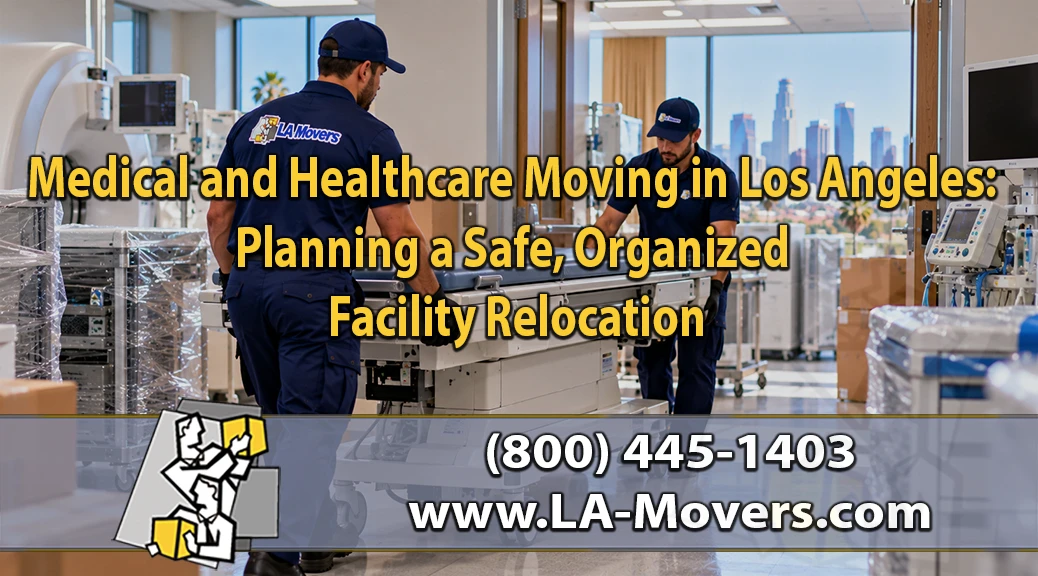
Relocating a medical or healthcare facility involves much more than moving furniture from one building to another. Hospitals, medical offices, clinics, diagnostic centers, and laboratories may contain sensitive equipment, computers, examination tables, storage cabinets, instruments, and other items that need careful handling and coordinated transportation.
A poorly planned move can create unnecessary delays, complicate staff schedules, and make it harder to prepare the new facility for patients. That is why medical and healthcare moving requires a thoughtful plan that considers the equipment being moved, the layout of both locations, access requirements, and the timeline for the transition.
For healthcare providers in Los Angeles, these considerations can become especially important when coordinating building access, parking, loading areas, elevators, and transportation across busy urban areas.
LA Movers provides medical and healthcare moving services, including assistance with medical equipment relocation and delivery. Understanding the moving process can help healthcare organizations prepare their facilities, communicate their requirements, and make informed decisions before moving day.
What Is Medical and Healthcare Moving?
Medical and healthcare moving is the relocation of equipment, furniture, supplies, and other assets used in healthcare environments. Depending on the facility, the project may involve a small medical office, a specialist clinic, a laboratory, or a larger healthcare operation.
Unlike a typical household move, healthcare relocation requires attention to how equipment is used and where it needs to be positioned at the destination. Items may be delicate, expensive, unusually shaped, or difficult to transport through standard doorways and corridors.
A healthcare move may include examination tables, hospital beds, medical carts, desks, cabinets, computers, diagnostic equipment, laboratory instruments, and general facility furnishings. The requirements depend on the organization and the equipment involved.
Some facilities may only need help moving furniture and standard equipment. Others may require a more coordinated relocation involving multiple departments, specialized instruments, and separate schedules for different areas.
The first step is to understand the scope of the move and identify which items require special preparation or handling.
Why Healthcare Relocation Needs Careful Planning
Healthcare facilities often operate around patient appointments, staff availability, equipment access, and established workflows. Moving without considering these factors can create unnecessary complications.
For example, a clinic relocating its examination rooms needs to know where beds, tables, storage cabinets, and computers will go at the new location. A laboratory may have instruments that require specific preparation before transportation. An administrative medical office may need its workstations and filing systems organized so employees can resume their responsibilities efficiently.
Planning helps bring these requirements together before the physical move begins.
It also gives the facility time to identify access limitations. Narrow hallways, stairs, loading docks, elevator dimensions, and restricted delivery hours can all affect how large or delicate equipment is moved.
For facilities in Los Angeles, it is useful to review the access conditions at both locations early. A moving team can then discuss the equipment dimensions, the route from each room to the vehicle, and the practical requirements for unloading and placement.
Medical Equipment Moving Requires the Right Preparation
Medical equipment is often one of the most important parts of a healthcare relocation. Some items are delicate or expensive, while others are bulky and difficult to maneuver. The preparation needed depends on the equipment and the manufacturer’s handling instructions.
Before scheduling transportation, healthcare administrators should identify the equipment being moved and consult the appropriate clinical, technical, or equipment specialists about preparation requirements.
Identifying Equipment That Needs Special Handling
Diagnostic machines, imaging equipment, laboratory instruments, microscopes, freezers, incubators, and other specialized devices may require additional attention during a move. Even when equipment appears sturdy, its internal components or calibration requirements may make careless handling unsuitable.
LA Movers’ medical equipment delivery service in Los Angeles describes assistance with medical equipment deliveries to hospitals, clinics, healthcare facilities, and other destinations.
Before the move, provide the moving company with an accurate description of the items, including their approximate dimensions, weight where known, and any handling concerns. Photographs can also help explain unusual shapes, access restrictions, or equipment that may need to be separated into components.
This information allows the team to discuss appropriate packing, protection, loading, and transportation arrangements before the scheduled date.
Preparing Equipment Before Transportation
Not every piece of medical equipment should be disconnected, dismantled, or prepared in the same way. Certain devices may need to be shut down or disconnected by qualified personnel, while other items may have specific instructions for movement or reinstallation.
Healthcare staff should follow manufacturer guidance and consult qualified technicians whenever equipment requires technical preparation. The moving team should be informed of these requirements before handling begins.
The goal is to establish clear responsibilities: who prepares the equipment, who handles its physical relocation, and who checks that it is ready for use after delivery.
This coordination is particularly important when the facility plans to resume services shortly after the move.
Moving Hospitals, Clinics, and Medical Offices
Different healthcare environments have different relocation needs. A medical office may primarily contain examination furniture, computers, desks, and storage. A clinic may have several treatment rooms and equipment areas. A larger facility may need to coordinate the movement of many departments and shared spaces.
Medical Office Relocation
Medical offices often combine patient-facing areas with administrative workspaces. The relocation may involve reception desks, waiting-room furniture, examination tables, office chairs, filing cabinets, computers, and storage units.
An organized move starts with a destination layout. Knowing where each item belongs can make unloading more efficient and reduce the need to move the same furniture multiple times.
It is also helpful to label rooms and major items according to their destination. Labels should be clear enough for the moving team to understand where items belong without exposing confidential patient information.
Businesses planning a wider workplace relocation can also review LA Movers’ office moving services for information about office furniture, equipment, and relocation support.
Clinic and Treatment Room Moving
Clinics may contain several rooms with similar furniture but different purposes. Without a clear plan, examination tables, carts, cabinets, and equipment can arrive in the wrong room or be placed where they obstruct access.
A room-by-room inventory helps the facility track what needs to move and where it should go. If a room has equipment that requires special handling or technical preparation, identify it separately and communicate the requirements in advance.
The destination should also be ready to receive the items. Clear pathways, completed room preparations, and a confirmed furniture layout can help prevent delays during unloading.
Laboratory Relocation
Laboratories can have particularly varied requirements because they may contain microscopes, centrifuges, testing instruments, refrigerators, freezers, and fragile laboratory supplies.
Before moving a laboratory, the organization should determine which items can be handled as ordinary equipment and which need specialist preparation or transportation arrangements. Temperature-sensitive materials, chemicals, biological samples, and regulated substances may require separate arrangements by qualified personnel and appropriate service providers.
Do not assume that a general moving service is suitable for every laboratory material. Discuss unusual or regulated items before requesting a moving plan, and confirm which responsibilities fall outside the moving company’s scope.
LA Movers also describes support for laboratory equipment relocation through its medical equipment delivery service. Specific equipment and handling requirements should be discussed before the project is scheduled.
Coordinating Furniture, Computers, and Other Facility Assets
Medical equipment may receive the most attention during planning, but furniture and everyday workplace assets also affect how smoothly a facility relocates.
Reception desks, workstations, chairs, cabinets, shelving, storage units, and staff-room furniture may need to be disassembled, protected, transported, and reassembled. Larger pieces can also create access challenges in older buildings or facilities with narrow corridors.
An inventory helps the organization decide what should be moved, what should be removed, and what may no longer be needed. It also makes it easier to separate furniture from equipment that requires different handling arrangements.
Computers and other IT equipment should be included in the plan. Healthcare organizations may rely on workstations for administration, scheduling, and other essential activities. The organization’s IT team should coordinate system shutdown, data protection, disconnection, and reconnection as appropriate.
Moving the physical equipment does not automatically restore a computer system or make a medical device ready for clinical use. Those steps may require the organization’s IT staff, equipment specialists, or authorized service technicians.
For projects involving computers and technology, LA Movers also offers IT moving and installation services. Discuss the equipment and the expected scope of work so the moving plan reflects the needs of the facility.
How to Reduce Disruption During a Healthcare Move
For many healthcare organizations, the goal is not simply to move everything safely. It is also to manage the transition in a way that limits avoidable interruptions to staff and operations.
The appropriate strategy depends on the facility, the size of the relocation, and whether the organization can temporarily pause some or all services.
Establish a Realistic Moving Schedule
Start by identifying the date when the new facility must be ready and the date when the existing location must be vacated. Work backward to establish time for preparation, packing, transportation, placement, and any required technical checks.
Where possible, coordinate the move around the organization’s operating schedule. Some facilities may be able to move in stages, while others may need a more concentrated relocation period.
Avoid setting a reopening date based only on when the last truck is expected to arrive. Equipment placement, workstation setup, room preparation, and technical verification may still need to happen before the facility is ready to operate.
Assign Responsibilities Before Moving Day
A successful move depends on clear communication between the people involved. Facility managers, department leads, IT staff, equipment specialists, and the moving company should understand their respective responsibilities.
For example, the facility may be responsible for identifying equipment, preparing clinical areas, and confirming that the destination is ready. Qualified technicians may need to disconnect or recommission certain devices. The moving company can then coordinate the agreed physical moving tasks.
Written instructions and a designated contact person can help resolve questions quickly when the move is underway.
Prepare the Destination in Advance
A new location should be ready before equipment and furniture arrive. Confirm that the necessary rooms are accessible, pathways are clear, and placement instructions are available.
If the facility has multiple departments, identify each room and its intended contents. This reduces uncertainty during unloading and makes it easier for staff to check whether the major items have arrived in the correct areas.
A well-prepared destination can be just as important as careful packing at the original location.
What to Look for in a Medical and Healthcare Moving Company
Choosing a moving company begins with understanding what the project actually involves. A business moving office furniture has different requirements from a laboratory relocating delicate instruments or a clinic moving several treatment rooms.
Look for a provider willing to discuss the specific items, building access, transportation needs, schedule, and destination arrangements before the move. The company should be able to explain the services it can provide and identify tasks that require another qualified specialist.
Ask how furniture and equipment will be protected, how items will be identified at the destination, and how the team will handle unusual dimensions or access restrictions. If the relocation involves medical devices that require technical disconnection, calibration, or recommissioning, confirm who will perform those tasks.
It is also useful to request a written estimate that clearly reflects the scope of the project. The information supplied during the quoting process should describe the equipment, approximate quantities, addresses, access conditions, and any special handling requirements that may affect the work.
A clear discussion at the beginning helps both parties understand the plan and identify questions before moving day.
What Affects the Cost of Medical and Healthcare Moving?
The cost of a healthcare relocation depends on the work involved rather than simply the distance between the two addresses.
The quantity and size of the items, the complexity of access, the need for packing or disassembly, and the time required for loading and unloading can all affect the estimate. Specialized equipment may require additional preparation or arrangements, depending on its characteristics and the services requested.
The distance between facilities is another consideration. So are building rules, elevator availability, loading restrictions, and whether the move needs to take place within a specific time window.
A small medical office moving standard furniture and computers will not necessarily have the same requirements as a laboratory moving delicate instruments or a facility with large diagnostic equipment.
To request a useful estimate, prepare an inventory and explain any unusual requirements in advance. You can contact LA Movers for a moving quote and provide details about the move, including the addresses, preferred date, approximate move size, building access, and equipment that may need special attention.
Why Consider LA Movers for Medical and Healthcare Moving?
LA Movers lists medical and healthcare moving among its specialized relocation services. The company also offers medical equipment delivery and related services for businesses and facilities in Los Angeles and surrounding Southern California areas.
Depending on the project, a healthcare relocation may involve a combination of equipment transportation, furniture moving, office relocation, and IT equipment handling. Identifying these needs early helps establish a more practical scope of work.
LA Movers’ medical equipment delivery service describes assistance with deliveries to hospitals, clinics, healthcare facilities, and other destinations. The company also identifies laboratory equipment as part of its medical equipment moving capabilities.
Every facility has its own requirements, so the best starting point is to explain the items being moved, the destination, the schedule, and any specialized handling concerns. This gives the team an opportunity to discuss the requested work and the arrangements that may be needed.
To learn more about the company’s services, visit the LA Movers website or contact the team through its contact page.
Plan Your Healthcare Relocation Before Moving Day
Medical and healthcare moving is easier to coordinate when equipment, furniture, staff responsibilities, access arrangements, and destination layouts are considered together. A clear plan helps identify potential obstacles early and reduces uncertainty when the physical move begins.
Start with an inventory, identify equipment that needs specialist preparation, confirm the new facility’s readiness, and establish who is responsible for each stage of the transition. Discuss unusual items and timing requirements with your moving provider before finalizing the schedule.
If your clinic, medical office, laboratory, or healthcare facility is planning a relocation in Los Angeles or the surrounding area, contact LA Movers to discuss your moving requirements and request an estimate. Providing clear information at the start can help you develop a moving plan that fits your facility’s needs.
Frequently Asked Questions About Medical and Healthcare Moving
What is included in medical and healthcare moving services?
Services can include moving medical furniture, equipment, computers, storage units, and other facility assets. The exact scope depends on the provider and the project. Technical tasks such as disconnecting, calibrating, or recommissioning medical devices may require qualified specialists and should be confirmed separately.
Can medical equipment be moved between two locations in Los Angeles?
Medical equipment can be relocated between facilities when the equipment, access conditions, and transportation requirements are suitable for the planned move. Provide details about the equipment and both locations when requesting an estimate so the necessary arrangements can be discussed.
How should a clinic prepare for relocation?
A clinic should create an inventory, identify items requiring special handling, coordinate with staff and technical specialists, prepare the new rooms, and confirm building access. Clear room labels and placement instructions can also help organize unloading.
Can laboratory equipment be included in a healthcare move?
Some laboratory equipment can be included, but the requirements depend on the instrument and any special handling instructions. Delicate devices, temperature-sensitive materials, chemicals, and regulated substances may require separate preparation or specialized arrangements. Confirm these needs before scheduling the move.
How can a healthcare facility reduce downtime during relocation?
Begin planning early, establish a realistic schedule, assign responsibilities, prepare the destination, and coordinate the moving process with facility management and technical staff. The facility should also allow time for equipment checks and any necessary setup before resuming normal operations.
What affects the cost of medical equipment moving?
Costs can depend on the number and dimensions of items, transportation distance, access restrictions, packing requirements, disassembly, loading and unloading time, and specialized handling needs. An accurate inventory and clear description of the move help the provider prepare a more relevant estimate.
How do I request a medical and healthcare moving estimate from LA Movers?
Visit the LA Movers free quote page and provide your preferred date, pickup and destination addresses, move size, building access details, and information about any specialized equipment. Include any unusual handling or scheduling requirements so they can be discussed before the move.